হার্ট, কিডনি ও বাতজনিত জটিলতাHeart, Kidney & Rheumatic Disease
অন্য রোগের কারণে ফুসফুসে সৃষ্ট জটিলতার চিকিৎসাLung complications arising from disease elsewhere in the body
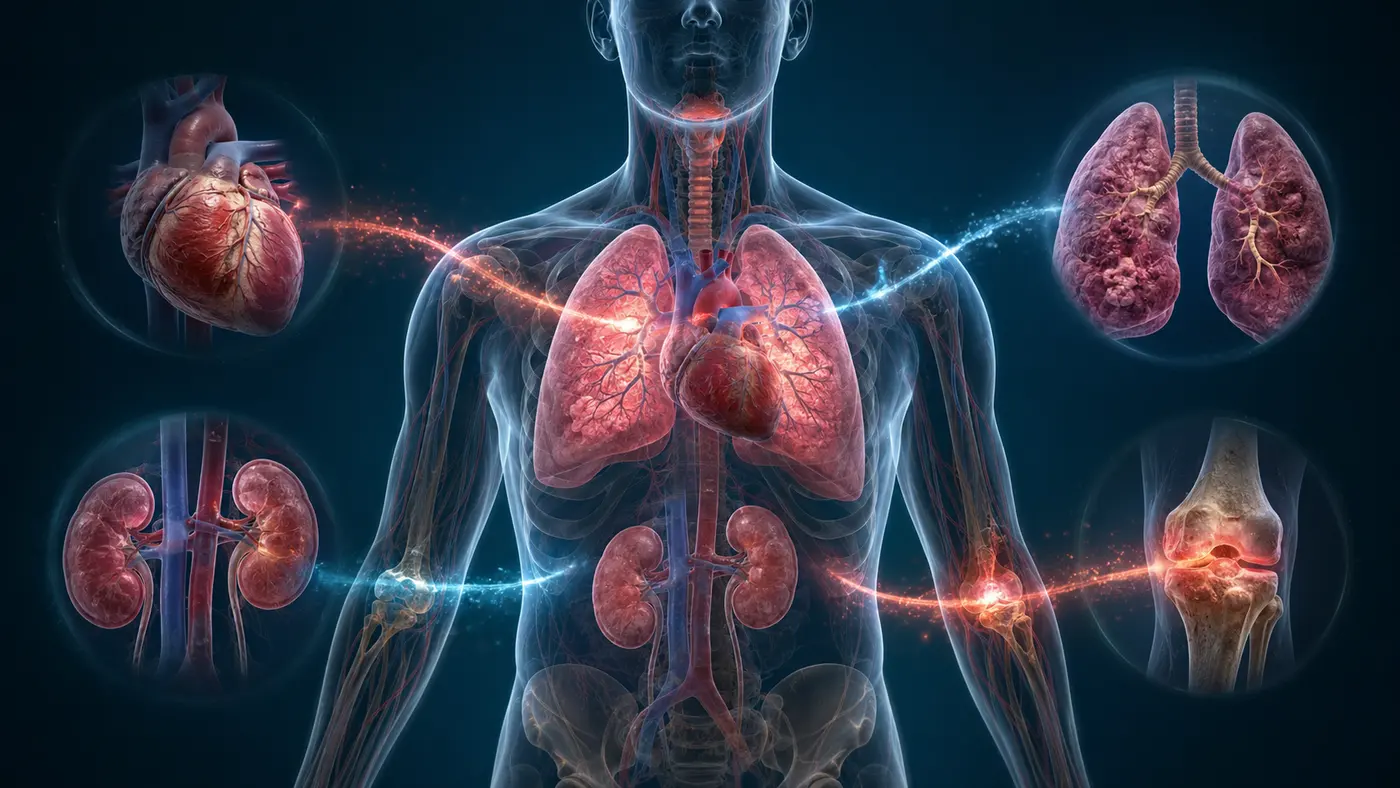
হার্ট, কিডনি ও বাতজনিত জটিলতা
হার্ট, কিডনি ও বাতজনিত সমস্যা অনেক সময় একে অপরের সঙ্গে সম্পর্কিত হতে পারে। বিশেষ করে Diabetes, High Blood Pressure, Autoimmune Disease এবং দীর্ঘমেয়াদি প্রদাহজনিত রোগ থাকলে শরীরের একাধিক অঙ্গ ও সিস্টেম একসঙ্গে আক্রান্ত হতে পারে।
হার্টের রোগ, কিডনির কার্যক্ষমতা কমে যাওয়া বা বাতজনিত প্রদাহের কারণে দুর্বলতা, শরীর ফুলে যাওয়া, জয়েন্টে ব্যথা, শ্বাসকষ্ট, বুকের অস্বস্তি কিংবা দৈনন্দিন কাজে অসুবিধার মতো সমস্যা দেখা দিতে পারে। তাই শুধু একটি উপসর্গের চিকিৎসা না করে প্রয়োজন অনুযায়ী সামগ্রিকভাবে মূল্যায়ন করা গুরুত্বপূর্ণ।
সাধারণ লক্ষণ
সমস্যার ধরন অনুযায়ী উপসর্গ ভিন্ন হতে পারে। যেমন—
বুকের ব্যথা বা অস্বস্তি
শ্বাসকষ্ট
হৃদ্স্পন্দন অস্বাভাবিক লাগা
দ্রুত ক্লান্ত হয়ে পড়া
পা, গোড়ালি বা মুখ ফুলে যাওয়া
প্রস্রাবের পরিমাণ বা ধরনে পরিবর্তন
প্রস্রাবে ফেনা বা রক্ত দেখা
কোমর বা শরীরের বিভিন্ন স্থানে ব্যথা
জয়েন্টে ব্যথা, ফোলা বা শক্ত হয়ে যাওয়া
সকালে জয়েন্টে বেশি stiffness
জ্বর বা দীর্ঘস্থায়ী দুর্বলতা
অস্বাভাবিক ওজনের পরিবর্তন
কী কী কারণে এসব জটিলতা হতে পারে?
বিভিন্ন রোগ ও Risk Factor-এর কারণে হার্ট, কিডনি বা জয়েন্টে সমস্যা হতে পারে। যেমন—
High Blood Pressure
Diabetes
Heart Disease
Chronic Kidney Disease
Rheumatoid Arthritis ও অন্যান্য Autoimmune Disease
Gout
দীর্ঘস্থায়ী প্রদাহজনিত রোগ
অতিরিক্ত ওজন বা স্থূলতা
ধূমপান
উচ্চ Cholesterol
কিছু নির্দিষ্ট ওষুধ
পারিবারিক রোগের ইতিহাস
কিছু Autoimmune বা Rheumatological Disease একই সঙ্গে বিভিন্ন অঙ্গকে প্রভাবিত করতে পারে। তাই উপসর্গের ধরন অনুযায়ী সঠিক কারণ খুঁজে বের করা গুরুত্বপূর্ণ।
কখন ডাক্তার দেখানো উচিত?
বারবার বুকের অস্বস্তি, শ্বাসকষ্ট, পা বা মুখ ফুলে যাওয়া, প্রস্রাবের পরিবর্তন, দীর্ঘদিনের জয়েন্ট ব্যথা বা ফোলা, সকালে দীর্ঘস্থায়ী জয়েন্ট stiffness অথবা অকারণ দুর্বলতা থাকলে চিকিৎসকের পরামর্শ নেওয়া উচিত।
বিশেষ করে Diabetes বা High Blood Pressure-এর মতো দীর্ঘমেয়াদি রোগ থাকলে নিয়মিত Heart এবং Kidney Health Assessment গুরুত্বপূর্ণ।
কীভাবে Diagnosis করা হয়?
রোগীর উপসর্গ ও শারীরিক পরীক্ষার পাশাপাশি প্রয়োজন অনুযায়ী করা হতে পারে—
Blood Pressure ও Oxygen Saturation Measurement
Blood Glucose ও HbA1c
Kidney Function Tests
Serum Creatinine ও eGFR
Urine Routine Examination
Urine Protein/Albumin Assessment
Lipid Profile
ECG
Echocardiography
প্রয়োজন অনুযায়ী Chest X-ray বা অন্যান্য Imaging
Rheumatological Blood Tests
Uric Acid
* Joint বা অন্যান্য অঙ্গের প্রয়োজনীয় Imaging
সব রোগীর জন্য একই পরীক্ষা প্রয়োজন হয় না। উপসর্গ, বয়স, Risk Factors এবং প্রাথমিক পরীক্ষার ফলাফল অনুযায়ী পরবর্তী পরীক্ষা নির্ধারণ করা হয়।
চিকিৎসা সম্পর্কে সাধারণ তথ্য
চিকিৎসা সম্পূর্ণভাবে নির্ভর করে সমস্যার কারণ ও তীব্রতার ওপর।
চিকিৎসায় থাকতে পারে—
Blood Pressure ও Blood Sugar নিয়ন্ত্রণ
Cholesterol ও Cardiovascular Risk Management
প্রয়োজন অনুযায়ী Heart Disease-এর চিকিৎসা
Kidney Disease-এর কারণ ও জটিলতার চিকিৎসা
Rheumatological বা Autoimmune Disease-এর নির্দিষ্ট চিকিৎসা
Gout-এর ক্ষেত্রে প্রয়োজন অনুযায়ী Uric Acid Management
স্বাস্থ্যকর খাদ্যাভ্যাস ও ওজন নিয়ন্ত্রণ
নিয়মিত শারীরিক কার্যক্রম, রোগীর অবস্থার উপযোগী হলে
প্রয়োজন অনুযায়ী Physiotherapy বা Joint Care
নিয়মিত Blood ও Urine Tests
* দীর্ঘমেয়াদি Monitoring ও Follow-up
বিশেষ করে Kidney Disease থাকলে কোনো Painkiller বা অন্য ওষুধ নিজে থেকে নিয়মিত খাওয়া উচিত নয়। ওষুধের ধরন ও Dose কিডনির কার্যক্ষমতার ওপরও নির্ভর করতে পারে।
কখন জরুরি চিকিৎসা প্রয়োজন?
নিচের কোনো লক্ষণ দেখা দিলে দ্রুত জরুরি চিকিৎসা প্রয়োজন—
হঠাৎ বা তীব্র বুকের ব্যথা/চাপ
তীব্র শ্বাসকষ্ট
অজ্ঞান হয়ে যাওয়া বা প্রায় অজ্ঞান লাগা
হঠাৎ শরীরের এক পাশ দুর্বল বা অবশ হয়ে যাওয়া
হঠাৎ কথা বলতে বা বুঝতে সমস্যা হওয়া
প্রস্রাবের পরিমাণ হঠাৎ অনেক কমে যাওয়া বা বন্ধ হয়ে যাওয়া
দ্রুত শরীর ফুলে যাওয়া ও শ্বাসকষ্ট
অত্যন্ত তীব্র বা দ্রুত বাড়তে থাকা জয়েন্ট/শরীরের ব্যথার সঙ্গে গুরুতর অসুস্থতা
বিভ্রান্তি বা চেতনা কমে যাওয়া
দ্রুত শারীরিক অবস্থার অবনতি
Frequently Asked Questions
হার্ট, কিডনি ও বাতের সমস্যা কি একে অপরের সঙ্গে সম্পর্কিত?
হ্যাঁ। কিছু রোগ ও Risk Factor—যেমন Diabetes, High Blood Pressure এবং Autoimmune Disease—একাধিক অঙ্গকে প্রভাবিত করতে পারে। একটি সমস্যার চিকিৎসার সময় অন্য অঙ্গগুলোর অবস্থাও বিবেচনা করা গুরুত্বপূর্ণ।
পা ফুলে গেলে কি সবসময় কিডনির সমস্যা বোঝায়?
না। Kidney Disease ছাড়াও Heart Disease, Liver Disease, কিছু ওষুধ, শিরার সমস্যা এবং অন্যান্য কারণে পা ফুলতে পারে। কারণ নির্ণয়ের জন্য প্রয়োজনীয় মূল্যায়ন দরকার।
জয়েন্টে ব্যথা হলেই কি বাত হয়েছে?
না। জয়েন্টের ব্যথার অনেক কারণ থাকতে পারে। Gout, Rheumatoid Arthritis, Osteoarthritis, আঘাত বা অন্য সমস্যার কারণে ব্যথা হতে পারে।
কিডনির সমস্যা থাকলে কি Painkiller খাওয়া যায়?
কিছু Painkiller কিডনির ওপর ক্ষতিকর প্রভাব ফেলতে পারে, বিশেষ করে নির্দিষ্ট পরিস্থিতিতে বা দীর্ঘদিন ব্যবহার করলে। তাই Kidney Disease থাকলে নিয়মিত Painkiller নেওয়ার আগে চিকিৎসকের পরামর্শ নেওয়া উচিত।
Diabetes ও High Blood Pressure কেন কিডনির জন্য গুরুত্বপূর্ণ?
দীর্ঘদিন অনিয়ন্ত্রিত Diabetes ও High Blood Pressure কিডনির রক্তনালী ও Filter করার ক্ষমতার ওপর ক্ষতিকর প্রভাব ফেলতে পারে। তাই Blood Sugar ও Blood Pressure নিয়ন্ত্রণের পাশাপাশি নিয়মিত Kidney Assessment গুরুত্বপূর্ণ।
Related Conditions & Services
High Blood Pressure
Diabetes
Heart Disease
Chronic Kidney Disease
Rheumatoid Arthritis
Gout
Autoimmune Disease
Joint Pain & Arthritis
Obesity & Weight Management
Metabolic Disorders
Doctor Consultation
হার্ট, কিডনি ও বাতজনিত সমস্যার উপসর্গ অনেক সময় একে অপরের সঙ্গে মিলে যেতে পারে। তাই শুধু একটি উপসর্গ দেখে চিকিৎসা না করে রোগীর সামগ্রিক স্বাস্থ্য, Risk Factors, Blood ও Urine Tests এবং প্রয়োজনীয় Imaging বিবেচনা করে কারণ নির্ণয় করা গুরুত্বপূর্ণ।
রোগীর অবস্থার ভিত্তিতে Lifestyle Modification, প্রয়োজনীয় Medication, পরীক্ষা-নিরীক্ষা এবং নিয়মিত Follow-up-এর মাধ্যমে একটি ব্যক্তিগত চিকিৎসা পরিকল্পনা করা হয়।
Heart, Kidney & Rheumatic Complications
Heart, kidney and rheumatic conditions can sometimes be interconnected. In particular, Diabetes, High Blood Pressure, Autoimmune Diseases and chronic inflammatory conditions may affect multiple organs and body systems.
Heart disease, reduced kidney function or inflammatory joint disorders may cause symptoms such as weakness, swelling, joint pain, breathlessness, chest discomfort or difficulty with daily activities. A comprehensive assessment is therefore important rather than focusing on a single symptom alone.
Common Symptoms
Symptoms vary depending on the underlying condition and may include—
Chest pain or discomfort
Shortness of breath
Abnormal or unusual heartbeat
Easy fatigability
Swelling of the legs, ankles or face
Changes in urine amount or appearance
Foamy or blood-stained urine
Back or generalized body pain
Joint pain, swelling or stiffness
Prolonged morning stiffness
Fever or persistent weakness
Unexplained weight changes
What Can Cause These Complications?
Heart, kidney and rheumatic problems can have different causes and Risk Factors, including—
High Blood Pressure
Diabetes
Heart Disease
Chronic Kidney Disease
Rheumatoid Arthritis and other Autoimmune Diseases
Gout
Chronic inflammatory conditions
Overweight or obesity
Smoking
High Cholesterol
Certain medications
Family history of relevant diseases
Some Autoimmune and Rheumatological Diseases can affect multiple organs. Identifying the underlying cause is therefore an important part of evaluation.
When Should You See a Doctor?
Medical evaluation is recommended for recurrent chest discomfort, breathlessness, swelling of the legs or face, changes in urination, persistent joint pain or swelling, prolonged morning stiffness or unexplained weakness.
Regular Heart and Kidney Health Assessment is particularly important for people living with chronic conditions such as Diabetes or High Blood Pressure.
How Is It Diagnosed?
Depending on the symptoms and suspected condition, assessment may include—
Blood Pressure and Oxygen Saturation Measurement
Blood Glucose and HbA1c
Kidney Function Tests
Serum Creatinine and eGFR
Urine Routine Examination
Urine Protein/Albumin Assessment
Lipid Profile
ECG
Echocardiography
Chest X-ray or other Imaging when appropriate
Rheumatological Blood Tests
Uric Acid
* Appropriate Imaging of joints or other affected organs
Not every patient needs every test. Further investigations are selected according to the symptoms, age, Risk Factors and initial findings.
General Information About Treatment
Treatment depends entirely on the underlying cause and severity of the condition.
Management may include—
Blood Pressure and Blood Sugar Control
Cholesterol and Cardiovascular Risk Management
Appropriate treatment for Heart Disease
Treatment of the underlying cause and complications of Kidney Disease
Specific treatment for Rheumatological or Autoimmune Disease
Uric Acid Management when appropriate for Gout
Healthy diet and weight management
Regular physical activity when appropriate for the patient's condition
Physiotherapy or Joint Care when indicated
Regular Blood and Urine Tests
* Long-term Monitoring and Follow-up
People with Kidney Disease should not regularly take Painkillers or other medications without medical advice. Some medicines require special consideration based on kidney function.
When Is Urgent Medical Care Needed?
Seek urgent medical attention for—
Sudden or severe chest pain or pressure
Severe shortness of breath
Fainting or near-fainting
Sudden weakness or numbness on one side of the body
Sudden difficulty speaking or understanding speech
A sudden major reduction or complete absence of urine
Rapid swelling associated with breathlessness
Extremely severe or rapidly worsening joint or body pain accompanied by significant illness
Confusion or reduced consciousness
Rapid deterioration of the overall condition
Frequently Asked Questions
Are heart, kidney and rheumatic conditions related to each other?
They can be. Conditions and Risk Factors such as Diabetes, High Blood Pressure and Autoimmune Disease can affect more than one organ. The health of other organs should therefore be considered when managing one condition.
Does swelling of the legs always mean kidney disease?
No. Leg swelling can also occur due to Heart Disease, Liver Disease, certain medications, venous problems and other conditions. Proper evaluation is needed to identify the cause.
Does joint pain always mean Rheumatism?
No. Joint pain has many possible causes, including Gout, Rheumatoid Arthritis, Osteoarthritis, injury and other conditions.
Can I take Painkillers if I have Kidney Disease?
Some Painkillers can adversely affect kidney function, particularly in certain situations or with prolonged use. People with Kidney Disease should seek medical advice before regularly taking Painkillers.
Why are Diabetes and High Blood Pressure important for kidney health?
Long-term uncontrolled Diabetes and High Blood Pressure can damage the kidney's blood vessels and filtering function. Good Blood Sugar and Blood Pressure Control, together with regular Kidney Assessment, can therefore be important.
Related Conditions & Services
High Blood Pressure
Diabetes
Heart Disease
Chronic Kidney Disease
Rheumatoid Arthritis
Gout
Autoimmune Disease
Joint Pain & Arthritis
Obesity & Weight Management
Metabolic Disorders
Doctor Consultation
Symptoms involving the heart, kidneys and joints can sometimes overlap. A comprehensive assessment of the patient's overall health, Risk Factors, Blood and Urine Tests and appropriate Imaging can help identify the underlying cause.
Based on the patient's condition, an individualized plan involving Lifestyle Modification, appropriate Medication, investigations and regular Follow-up can be developed.