ফুসফুসের কার্যক্ষমতা ও ক্যান্সার শনাক্তকরণLung Function & Cancer Detection
স্পাইরোমেট্রি, ইমেজিং ও বায়োপসির মাধ্যমে নিখুঁত নির্ণয়Precise assessment through spirometry, imaging and biopsy
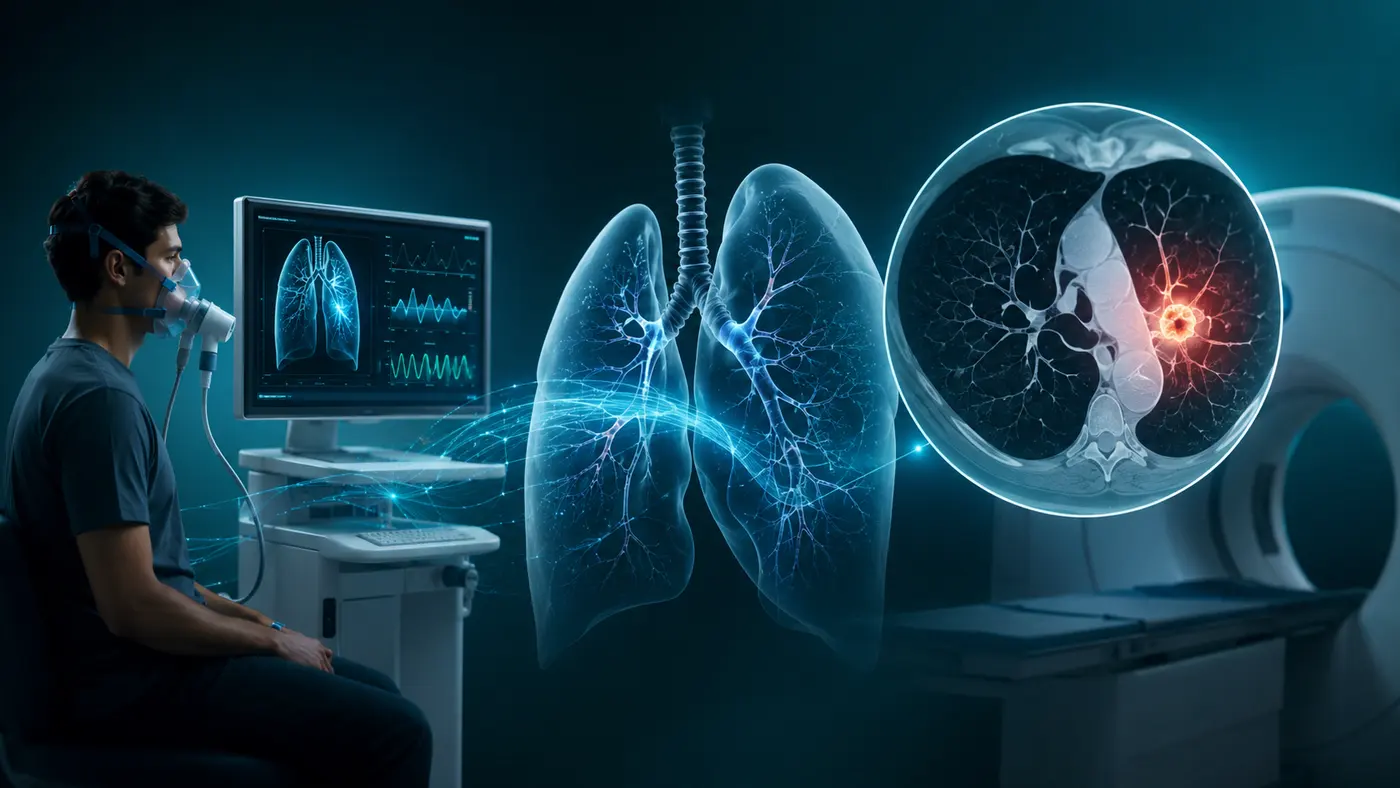
ফুসফুসের কার্যক্ষমতা ও ক্যান্সার শনাক্তকরণ
ফুসফুসের কার্যক্ষমতা (Lung Function) এবং ফুসফুসে কোনো অস্বাভাবিক পরিবর্তন বা ক্যান্সারের সম্ভাবনা আছে কি না—দুটি বিষয়ই শ্বাসকষ্ট, দীর্ঘস্থায়ী কাশি বা অন্যান্য Respiratory Symptoms-এর মূল্যায়নে গুরুত্বপূর্ণ।
Lung Function Testing ফুসফুস কতটা ভালোভাবে বাতাস গ্রহণ ও বের করতে পারছে এবং প্রয়োজন অনুযায়ী শরীরে অক্সিজেন পৌঁছানোর সক্ষমতা সম্পর্কে ধারণা দিতে পারে। অন্যদিকে, Chest Imaging ও প্রয়োজনীয় অন্যান্য পরীক্ষার মাধ্যমে ফুসফুসে কোনো অস্বাভাবিকতা থাকলে তা আরও বিস্তারিতভাবে মূল্যায়ন করা হয়।
কখন ফুসফুসের কার্যক্ষমতা পরীক্ষা করা প্রয়োজন?
নিচের মতো সমস্যা থাকলে Lung Function মূল্যায়নের প্রয়োজন হতে পারে—
দীর্ঘস্থায়ী বা বারবার শ্বাসকষ্ট
হাঁটা বা ব্যায়ামের সময় দ্রুত হাঁপিয়ে যাওয়া
দীর্ঘস্থায়ী কাশি
বারবার Wheezing বা বুক চাপ লাগা
COPD বা Asthma-এর মূল্যায়ন ও Follow-up
ধূমপানের দীর্ঘ ইতিহাস
DPLD / Interstitial Lung Disease-এর সন্দেহ
বারবার Respiratory Infection
* চিকিৎসার পর ফুসফুসের কার্যক্ষমতা পর্যবেক্ষণ
কীভাবে ফুসফুসের কার্যক্ষমতা মূল্যায়ন করা হয়?
রোগীর উপসর্গ ও প্রয়োজন অনুযায়ী বিভিন্ন পরীক্ষা করা হতে পারে—
Spirometry — ফুসফুস থেকে কত দ্রুত ও কত পরিমাণ বাতাস বের করতে পারছেন তা পরিমাপ করে
Bronchodilator Response Test — শ্বাসনালী প্রসারিত করার ওষুধের পর Lung Function-এ পরিবর্তন হচ্ছে কি না দেখা হয়
Peak Flow Measurement — বিশেষ করে Asthma-এর ক্ষেত্রে Airflow পর্যবেক্ষণে ব্যবহার করা হতে পারে
Lung Volume Testing — ফুসফুসের মোট ধারণক্ষমতা ও বিভিন্ন Lung Volume মূল্যায়ন করে
Diffusing Capacity (DLCO) — ফুসফুস থেকে রক্তে অক্সিজেন স্থানান্তরের সক্ষমতা সম্পর্কে ধারণা দেয়
Exercise বা হাঁটার সময় Oxygen Saturation — শারীরিক পরিশ্রমে অক্সিজেনের মাত্রা কীভাবে পরিবর্তিত হয় তা দেখা হয়
সব রোগীর জন্য সব পরীক্ষা প্রয়োজন হয় না।
ফুসফুসের ক্যান্সার শনাক্তকরণ
ফুসফুসের ক্যান্সারের প্রাথমিক পর্যায়ে অনেক সময় স্পষ্ট কোনো উপসর্গ নাও থাকতে পারে। উপসর্গ দেখা দিলে তা অন্যান্য ফুসফুসের রোগের মতোও হতে পারে।
সম্ভাব্য লক্ষণগুলোর মধ্যে রয়েছে—
দীর্ঘদিনের বা পরিবর্তিত ধরনের কাশি
কাশিতে রক্ত আসা
ধীরে ধীরে বাড়তে থাকা শ্বাসকষ্ট
বারবার ফুসফুসে ইনফেকশন বা Pneumonia হওয়া
বুকের ব্যথা বা অস্বস্তি
দীর্ঘস্থায়ী কর্কশ কণ্ঠস্বর
অস্বাভাবিক ওজন কমে যাওয়া
ক্ষুধা কমে যাওয়া
* দীর্ঘস্থায়ী দুর্বলতা বা ক্লান্তি
বিশেষ করে দীর্ঘদিনের ধূমপানের ইতিহাস থাকলে এসব লক্ষণকে অবহেলা না করে মূল্যায়ন করা গুরুত্বপূর্ণ।
কীভাবে ফুসফুসের ক্যান্সার শনাক্ত করা হয়?
ফুসফুসের ক্যান্সার নির্ণয়ে একটি মাত্র পরীক্ষা সবসময় যথেষ্ট নয়। রোগীর উপসর্গ, বয়স, ধূমপানের ইতিহাস, শারীরিক পরীক্ষা এবং Imaging Findings অনুযায়ী পরবর্তী পরীক্ষা নির্ধারণ করা হয়।
প্রয়োজনে করা হতে পারে—
Chest X-ray
CT Scan of the Chest
Low-Dose CT, বিশেষ ক্ষেত্রে Lung Cancer Screening-এর জন্য
PET-CT, নির্দিষ্ট পরিস্থিতিতে
Sputum বা অন্যান্য Laboratory Testing
Bronchoscopy
Needle Biopsy বা অন্য পদ্ধতিতে Tissue Sampling
Biopsy-এর Pathological Examination
* প্রয়োজন অনুযায়ী Molecular বা Biomarker Testing
শুধু Chest X-ray বা CT Scan-এ কোনো সন্দেহজনক পরিবর্তন দেখা গেলেই ক্যান্সার নিশ্চিত হয় না। প্রয়োজন হলে Tissue বা অন্যান্য নির্দিষ্ট পরীক্ষার মাধ্যমে Diagnosis নিশ্চিত করা হয়।
কখন ডাক্তার দেখানো উচিত?
নিচের সমস্যা থাকলে চিকিৎসকের পরামর্শ নেওয়া উচিত—
কয়েক সপ্তাহ ধরে কাশি না কমা
আগের কাশির ধরন হঠাৎ পরিবর্তন হওয়া
কাশিতে রক্ত আসা
অকারণে ওজন কমে যাওয়া
বারবার Pneumonia বা Lung Infection হওয়া
নতুন বা ক্রমশ বাড়তে থাকা শ্বাসকষ্ট
দীর্ঘস্থায়ী বুকের ব্যথা
দীর্ঘদিনের Smoking History-এর সঙ্গে নতুন Respiratory Symptoms
চিকিৎসা সম্পর্কে সাধারণ তথ্য
ফুসফুসের কার্যক্ষমতা কমে গেলে চিকিৎসা মূল কারণের ওপর নির্ভর করে। Asthma, COPD, DPLD, Respiratory Infection বা অন্য কোনো রোগ থাকলে সেই অনুযায়ী চিকিৎসা দেওয়া হয়।
ফুসফুসের ক্যান্সার শনাক্ত হলে চিকিৎসা নির্ভর করে ক্যান্সারের ধরন, Stage, অবস্থান, রোগীর সামগ্রিক অবস্থা এবং প্রয়োজনীয় Pathology/Molecular Test-এর ফলাফলের ওপর। চিকিৎসায় Surgery, Radiation Therapy, Chemotherapy, Targeted Therapy, Immunotherapy বা এগুলোর সমন্বয় প্রয়োজন হতে পারে।
কখন জরুরি চিকিৎসা প্রয়োজন?
নিচের কোনো লক্ষণ দেখা দিলে দ্রুত জরুরি চিকিৎসা প্রয়োজন—
তীব্র বা হঠাৎ শ্বাসকষ্ট
কাশিতে বেশি পরিমাণ বা চলমান রক্তপাত
তীব্র বুকের ব্যথা
ঠোঁট বা মুখ নীলচে হয়ে যাওয়া
অজ্ঞান হয়ে যাওয়া বা প্রচণ্ড মাথা ঘোরা
দ্রুত শারীরিক অবস্থার অবনতি
Frequently Asked Questions
Spirometry কি ফুসফুসের ক্যান্সার শনাক্ত করতে পারে?
না। Spirometry মূলত ফুসফুসের কার্যক্ষমতা ও Airflow মূল্যায়ন করে। এটি Lung Cancer নির্ণয়ের পরীক্ষা নয়।
Chest X-ray-এ কি ফুসফুসের ক্যান্সার ধরা পড়ে?
কিছু ক্ষেত্রে Chest X-ray-তে অস্বাভাবিকতা দেখা যেতে পারে, তবে এটি সব ক্যান্সার শনাক্ত করতে পারে না। সন্দেহ থাকলে CT Scan বা অন্যান্য পরীক্ষা প্রয়োজন হতে পারে।
কাশিতে রক্ত মানেই কি Lung Cancer?
না। TB, Bronchitis, Pneumonia, Bronchiectasis এবং অন্যান্য কারণেও কাশিতে রক্ত আসতে পারে। তবে কারণ স্পষ্ট না হলে বা বারবার হলে অবশ্যই মূল্যায়ন করা প্রয়োজন।
ধূমপায়ীদের কি নিয়মিত Lung Cancer Screening করা উচিত?
সব ধূমপায়ীর জন্য একই Screening Plan প্রযোজ্য নয়। বয়স, Smoking History এবং অন্যান্য Risk Factors বিবেচনা করে চিকিৎসক Screening প্রয়োজন কি না নির্ধারণ করতে পারেন।
Lung Function কমে গেলে কি তা আবার স্বাভাবিক হতে পারে?
কারণের ওপর নির্ভর করে। Asthma-এর মতো কিছু অবস্থায় চিকিৎসার মাধ্যমে Lung Function উল্লেখযোগ্যভাবে উন্নত হতে পারে, আবার কিছু Chronic Lung Disease-এ দীর্ঘমেয়াদি পরিবর্তন থাকতে পারে।
Related Conditions & Services
Lung Cancer
COPD
Asthma & Allergy
DPLD / Interstitial Lung Disease
Chronic Cough
Breathlessness
Smoking-related Lung Damage
Bronchoscopy
Pulmonary Function Testing
Coughing Up Blood
* Lung Infection
Doctor Consultation
দীর্ঘস্থায়ী কাশি, শ্বাসকষ্ট, কাশিতে রক্ত, বারবার Lung Infection বা দীর্ঘদিনের Smoking History থাকলে উপসর্গের কারণ সঠিকভাবে মূল্যায়ন করা গুরুত্বপূর্ণ।
প্রয়োজন অনুযায়ী Lung Function Testing, Chest Imaging, Bronchoscopy এবং অন্যান্য Diagnostic Investigation ব্যবহার করে ফুসফুসের কার্যক্ষমতা ও অস্বাভাবিক পরিবর্তনের কারণ মূল্যায়ন করা হয় এবং প্রয়োজন হলে পরবর্তী চিকিৎসার জন্য উপযুক্ত Specialist Care-এর পরিকল্পনা করা হয়।
Lung Function & Lung Cancer Detection
Assessment of Lung Function and evaluation for abnormalities or possible Lung Cancer are important when a patient has persistent cough, breathlessness or other Respiratory Symptoms.
Lung Function Tests help assess how well the lungs move air and, through specific tests, how effectively oxygen can transfer from the lungs into the blood. Chest Imaging and other investigations can be used to evaluate structural abnormalities and investigate possible lung disease, including suspected Lung Cancer.
When Is Lung Function Testing Needed?
Lung Function may need to be assessed in situations such as—
Persistent or recurrent breathlessness
Shortness of breath during walking or exercise
Chronic cough
Recurrent Wheezing or chest tightness
Assessment and Follow-up of Asthma or COPD
A long history of smoking
Suspected DPLD / Interstitial Lung Disease
Recurrent Respiratory Infections
* Monitoring lung function after treatment
How Is Lung Function Assessed?
Depending on the patient's symptoms and clinical situation, investigations may include—
Spirometry — measures how much and how quickly air can be exhaled
Bronchodilator Response Testing — assesses whether airflow improves after a bronchodilator
Peak Flow Measurement — may be used to monitor airflow, particularly in Asthma
Lung Volume Testing — assesses total lung capacity and other Lung Volumes
Diffusing Capacity (DLCO) — provides information about how effectively gases move from the lungs into the blood
Exercise or Walking Oxygen Assessment — evaluates changes in Oxygen Saturation during physical activity
Not every patient needs every test.
Lung Cancer Detection
Lung Cancer may not cause obvious symptoms in its early stages. When symptoms occur, they can sometimes resemble those of other respiratory conditions.
Possible symptoms include—
Persistent or changing cough
Coughing Up Blood
Gradually worsening breathlessness
Recurrent Pneumonia or Lung Infections
Chest pain or discomfort
Persistent hoarseness
Unexplained weight loss
Reduced appetite
* Persistent weakness or fatigue
These symptoms should be evaluated, particularly in people with a significant history of smoking.
How Is Lung Cancer Diagnosed?
No single test is sufficient to diagnose every case of Lung Cancer. The choice of investigation depends on the patient's symptoms, age, smoking history, clinical examination and Imaging Findings.
Investigations may include—
Chest X-ray
CT Scan of the Chest
Low-Dose CT in appropriate situations for Lung Cancer Screening
PET-CT when indicated
Sputum or other Laboratory Testing
Bronchoscopy
Needle Biopsy or other Tissue Sampling
Pathological Examination of Biopsy Tissue
* Molecular or Biomarker Testing when appropriate
An abnormality on a Chest X-ray or CT Scan does not automatically mean Lung Cancer. When necessary, Tissue Sampling and other diagnostic tests are used to establish the diagnosis.
When Should You See a Doctor?
Medical evaluation is recommended if you have—
A cough that persists for several weeks
A sudden change in the nature of an existing cough
Coughing Up Blood
Unexplained weight loss
Recurrent Pneumonia or Lung Infections
New or progressively worsening breathlessness
Persistent chest pain
New Respiratory Symptoms with a long history of Smoking
General Information About Treatment
When Lung Function is reduced, treatment depends on the underlying cause. Conditions such as Asthma, COPD, DPLD, Respiratory Infection and other lung diseases require condition-specific management.
If Lung Cancer is diagnosed, treatment depends on the type and Stage of Cancer, its location, the patient's overall condition and relevant Pathology/Molecular Test results. Depending on the case, treatment may involve Surgery, Radiation Therapy, Chemotherapy, Targeted Therapy, Immunotherapy or a combination of treatments.
When Is Urgent Medical Care Needed?
Seek urgent medical attention if you develop—
Severe or sudden breathlessness
Heavy or ongoing bleeding when coughing
Severe chest pain
Blue lips or face
Fainting or severe dizziness
Rapid deterioration of your condition
Frequently Asked Questions
Can Spirometry detect Lung Cancer?
No. Spirometry primarily assesses Lung Function and Airflow. It is not a test used to diagnose Lung Cancer.
Can Lung Cancer be detected on a Chest X-ray?
A Chest X-ray may show abnormalities in some cases, but it cannot detect every Lung Cancer. A CT Scan or other investigations may be required when there is clinical concern.
Does coughing up blood always mean Lung Cancer?
No. Tuberculosis, Bronchitis, Pneumonia, Bronchiectasis and other conditions can also cause Hemoptysis. However, unexplained or recurrent bleeding should be medically evaluated.
Should every smoker have regular Lung Cancer Screening?
No single Screening plan applies to every smoker. Screening eligibility depends on factors such as age, Smoking History and other Risk Factors, and should be discussed with a healthcare professional.
Can reduced Lung Function improve?
It depends on the cause. Some conditions, such as Asthma, may show significant improvement with appropriate treatment, while some Chronic Lung Diseases can cause persistent changes.
Related Conditions & Services
Lung Cancer
COPD
Asthma & Allergy
DPLD / Interstitial Lung Disease
Chronic Cough
Breathlessness
Smoking-related Lung Damage
Bronchoscopy
Pulmonary Function Testing
Coughing Up Blood
* Lung Infection
Doctor Consultation
Persistent cough, breathlessness, Coughing Up Blood, recurrent Lung Infections or a significant Smoking History should be evaluated appropriately rather than assumed to have a single cause.
When indicated, Lung Function Testing, Chest Imaging, Bronchoscopy and other Diagnostic Investigations can help assess lung function and investigate structural abnormalities, guiding further management and Specialist Care when required.